Sisal vs Coconut Fiber Bristles: Which Is Better for Cleaning Brushes?
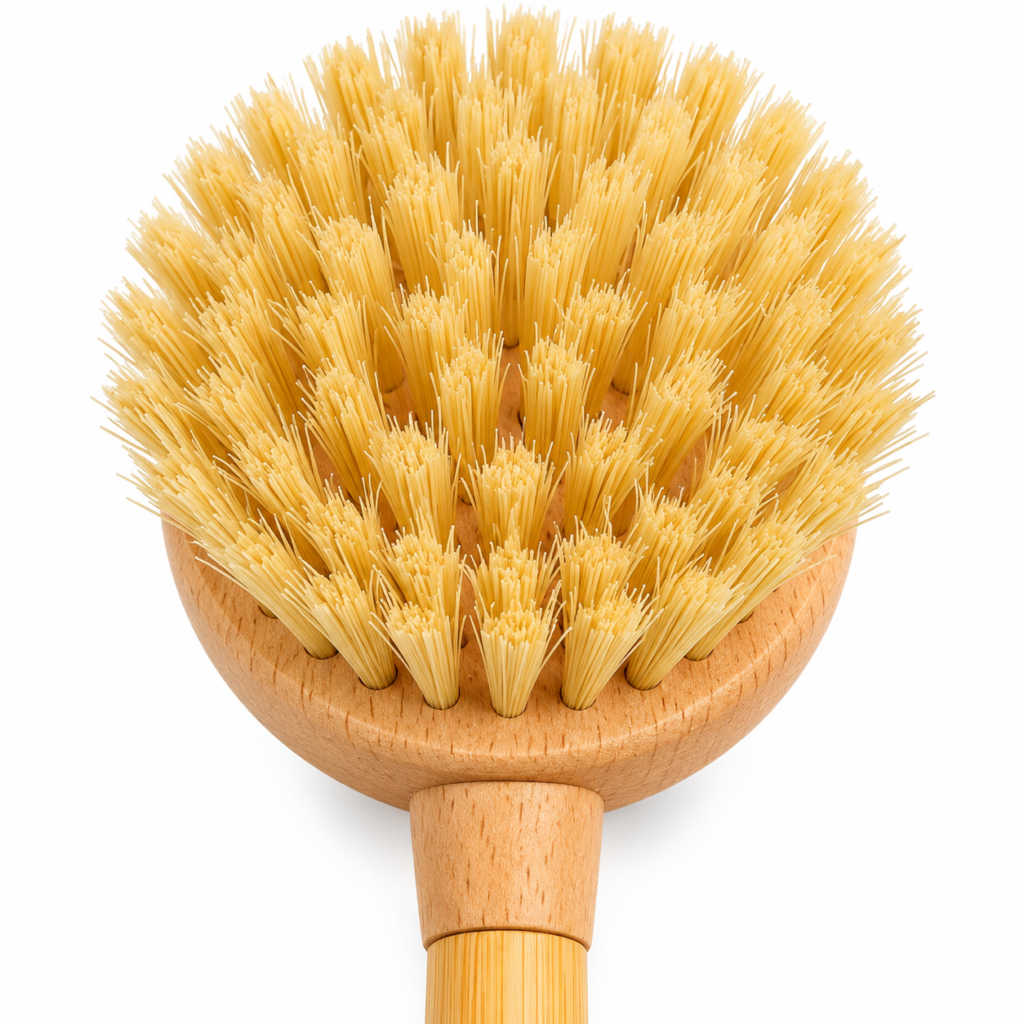
Sisal and coconut fiber are both plant-based materials used in cleaning brush bristles, but they serve different purposes. Sisal is widely used for everyday dish brushes. It is firm enough to remove daily grime from dishes, pots and pans while remaining easy to handle.
Sisal is commonly used in dish and kitchen brushes, while coconut fiber is often considered for applications where more aggressive scrubbing or coarser fibers may be appropriate. The best bristle depends on intended use, so buyers should review the bristle material for each product.
Contents
- What Sisal Bristles Are
- What Coconut Fiber Bristles Are
- Sisal vs Coconut Fiber at a Glance
- Which Bristle Suits Which Use
- How to Check Bristle Standards Before Ordering
- Frequently Asked Questions
- Request a Quotation
1. What Sisal Bristles Are
Sisal is made from the leaves of the agave plant. In brush form, the fibers are stiff, springy and hard-wearing for everyday kitchen tasks.
The behavior of sisal bristles during wet use depends on the actual fiber specification, bristle density and brush construction. Sisal bristles should be rinsed and left to dry between uses.
It is widely used in kitchen cleaning brushes because it can tackle common food residue. For example, the MUCEN MC-158 Bamboo Dish Brush uses stiff sisal bristles in a beech wood brush head with a bamboo handle.
2. What Coconut Fiber Bristles Are
Coconut fiber, also known as coir, comes from the husk of the coconut.
It is a coarse, strong fiber used in heavy-duty scrubbing brushes for pots, floors and outdoor cleaning. Coir feels rougher than sisal because its fibers are thicker and more rigid.
Coconut fiber is commonly used in heavy-duty scrubbing brushes and some general cleaning products.
3. Sisal vs Coconut Fiber at a Glance
| Feature | Sisal Bristles | Coconut Fiber Bristles |
|---|---|---|
| Source | Agave plant fibre | Coconut husk fibre |
| Feel | Stiff and springy | Coarse and rough |
| Typical use | Everyday dish and kitchen cleaning | Heavy-duty scrubbing, floors and hard surfaces |
| Water handling | Should be evaluated for the actual brush | Should be evaluated for the actual brush |
| Common products | Dish brushes, vegetable brushes | Pot brushes and heavy-duty cleaning brushes |
| Material type | Plant-based fibre | Plant-based fibre |
The wet-use behaviour of any natural fiber depends on the actual fiber specification, bristle density and brush construction. Where a supplier states a wet-use claim, ask whether it applies to the selected product.
4. Which Bristle Suits Which Use
For a dish brush used daily on plates, bowls and cutlery, sisal is the usual choice because it can clean well without being overly abrasive.
For a pot brush that has to handle stubborn food residue, a stiff sisal fill or a coarser coconut fiber fill may be appropriate. The choice should depend on the expected cleaning task and customer preference.
For a heavy-duty cleaning brush, coconut fiber is often the better fit because it is coarse and strong. There is no universal best bristle. Buyers should match the bristle to the intended use and examine a sample before ordering in bulk.
5. How to Check Bristle Standards Before Ordering
Bristle material and quality should be checked for each product model rather than assumed from the product range.
Buyers should ask the supplier to confirm:
- Bristle material and density
- Bristle stiffness and length
- How the bristles are set and whether they shed on first use
- How the brush performs in its intended cleaning use
- Handle and brush-head materials
- MOQ, samples and packaging
A physical sample should be tested on the intended surface and compared with other models before selecting a bulk order. For guidance, explore the MUCEN Kitchen Cleaning Brushes collection.
For a broader sourcing checklist covering product construction, dimensions, MOQ, samples and packaging, see our guide How to Source Bamboo Dish Brushes Wholesale: A B2B Buyer’s Checklist.
6. Frequently Asked Questions
Is sisal better than coconut fiber for dish brushes?
Sisal is widely used for everyday dish brushing because it is stiff enough to remove food residue while remaining easy to manage. Coconut fiber is coarser and better suited to tougher cleaning tasks.
Are sisal and coconut fiber bristles both plant-based?
Yes. Sisal comes from the agave plant, while coconut fiber comes from coconut husks. Both plant fibers are used in cleaning brushes.
Can I get a brush with a different bristle material?
Buyers can inquire about alternative bristle materials, stiffness and density. Whether a particular material, stiffness or density can be supplied must be confirmed for the product model. To check whether a different bristle material or fill is possible, buyers should share the target use and product requirements with MUCEN.
How should natural fiber bristles be cared for?
Rinse the brush after use and leave it to dry between uses. Check the sample for shedding and stiffness before ordering in bulk.
7. Request a Quotation
To create a cleaning brush range, confirm the bristle material for each model and check a physical sample before placing a bulk order.
To request a quotation for sisal or coconut fiber cleaning brushes, please provide:
- Product type and intended use
- Preferred bristle material and firmness
- Expected quantity
- Target market and delivery location
- Logo, packaging and labeling requirements
Explore the MUCEN Kitchen Cleaning Brushes collection or contact MUCEN with your product specifications, quantity, target market and intended use. You can also email sales@mucenbamboo.com with your requirements.